Block puzzle looks simple: you’re given three shapes at a time, you drop them onto a 9×9 grid, and a line clears when a row, a column, or a 3×3 box fills up completely. There’s no timer rushing you and no piece falling — so why do runs end so fast?
Because block puzzle isn’t really about the piece in front of you. It’s about the space you leave behind. Below are the habits that reliably turn short runs into long, high-scoring ones. If you want to try them live, you can open a free game of Temple Quest and practice as you read.
1. The one rule that matters most: keep the board open
Every other tip is a version of this one. Your score is not decided by the clear you make now — it’s decided by whether you’ll still have room to place pieces ten moves from now. Before you drop a shape, ask a single question: “Does this keep my options open, or does it box me in?”
Think in empty space, not filled space. Beginners look for where a piece fits. Strong players look for the placement that leaves the largest, cleanest empty area afterward. Same move, opposite mindset.
2. Always read all three pieces before placing the first
You’re given a set of three shapes, and you can place them in any order. This is the biggest source of wasted potential. Look at all three, then plan the sequence:
- If one piece is a big shape (a 3×3 square or a long 5-line), decide where it goes first, then fit the smaller pieces around it.
- Look for an order that sets up a clear: place two pieces that almost complete a row, then let the third finish it.
- Never place a piece just because it fits somewhere. Place it because it fits your plan for all three.
3. Protect room for the big shapes
The pieces that end runs are the large ones — especially the 3×3 square. If you never keep an empty 3×3 region somewhere on the board, the moment that square appears you’re forced to wedge it in and shatter your structure. Reserve a corner or a quadrant as “big-piece space” and defend it. A board that can always accept the largest shape almost never dies.
4. Clear lines to open space, not just to score
A clear is worth points, but its real value is the room it gives back. When you have a choice, take the clear that:
- Frees the most congested area, not the corner you weren’t using anyway.
- Breaks up a wall of blocks that was about to trap you.
- Re-opens space for that 3×3 square you’re protecting.
Sometimes the best move is to delay a small clear for a turn so you can make a bigger, better-placed one next turn.
5. Chase combos: rows, columns and boxes at once
The scoring jumps when you clear more than one line in a single placement. On a 9×9 grid with 3×3 boxes, the dream move is a piece that completes a row, a column and a 3×3 box simultaneously — or clears two or three rows at once. Set these up deliberately:
- Fill a row and a column so they share one empty cell.
- Make sure that empty cell also completes a 3×3 box.
- Drop a single block there and clear all three at once.
One well-planned combo can outscore a dozen ordinary clears.
6. Avoid holes — the silent killer
A “hole” is a single empty cell surrounded by filled ones. It can only be filled by a 1×1 piece, and 1×1 pieces don’t come when you need them. Every hole you create quietly shrinks the board. To avoid them:
- Place pieces flush against blocks you already have, building flat surfaces instead of jagged ones.
- Fill from the edges and corners inward, keeping the middle smooth.
- If a placement would leave a lonely 1-cell gap, look for a different spot first.
7. When the board fills up, switch to survival mode
Ambition is for an open board. Once things get tight, drop the combo dreams and take any clear that keeps you alive. Priorities flip: first survive, then rebuild open space, then start hunting combos again. Knowing when to switch modes is what keeps a run going past the point where most people lose.
Frequently asked questions
How do you get a high score in block puzzle?
Keep the board as empty as you can, and favour clears that free the most space. Big scores come from combos — a row, a column and a 3×3 box in one move, or several lines at once — so set those up rather than grabbing every small clear immediately.
Why do I keep losing at block puzzle?
Almost always because the board fills with holes that only a 1×1 piece can fill. Place pieces flush against existing blocks, avoid leaving single awkward gaps, and check all three upcoming pieces before placing the first.
Is block puzzle luck or skill?
Mostly skill. You can’t choose your pieces, but an open board fits almost any set of shapes. Skilled players lose far less to bad luck because they always leave room for the largest pieces.
Practice on real puzzles
Temple Quest is a free 9×9 block puzzle for Android — place pieces to clear rows, columns and 3×3 boxes, with an endless mode and a light temple-exploration theme. Because there’s no timer, it’s a relaxed way to drill every habit above until it becomes automatic.
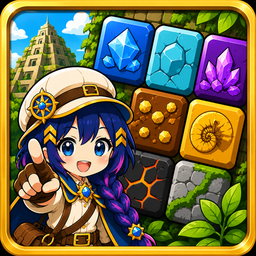
Block Puzzle: Temple Quest
Clear rows, columns and 3×3 boxes, with an endless mode
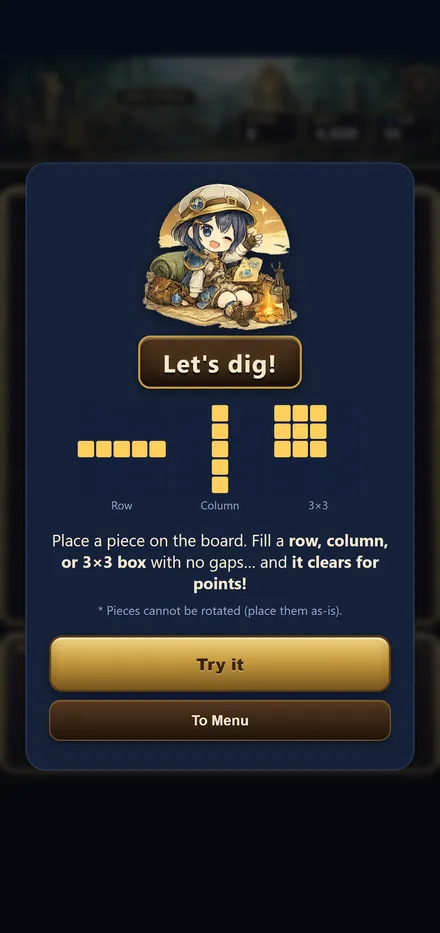
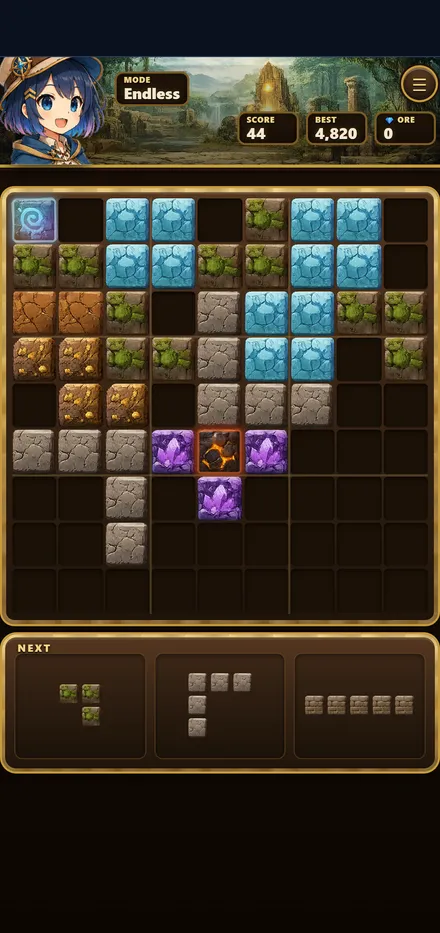

Free on Google Play for Android phones and tablets.
Google Play and the Google Play logo are trademarks of Google LLC.
Related guides
- How to Solve Nonograms — a different kind of logic puzzle, solved with pure deduction.
- ブロックパズルの遊び方とコツ(日本語版) — this guide in Japanese.
- All GRAMSHIFT guides